- Empty cart.
- Continue Shopping


Different Types of Plastic Pallets You Should Know Before Buying
- Posted on
Swift Technoplast
- 0
- Categories: Articles
Choosing the plastic pallet is a big decision. It affects how your business runs your costs and how safe your products are. Many buyers just look at the price. That is not the best way. You need to pick a pallet that fits how you use it.
This guide will help you understand the types of plastic pallets. We’ll keep it simple so you can make a choice.
Why Plastic Pallets Are So Popular
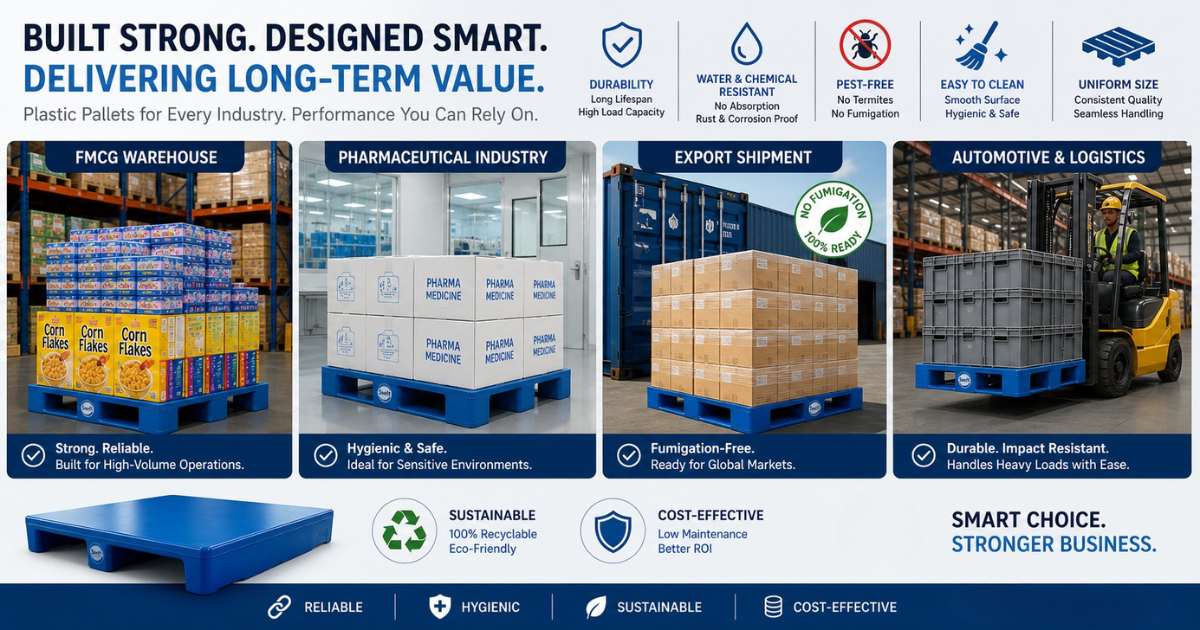
Plastic pallets are used in industries because they are:
- Durable and last a long time
- Resistant to water, chemicals and pests
- Easy to clean and keep clean
- Consistent in size and weight
- Good for export (no fumigation needed)
They are used in FMCG, pharmaceuticals, logistics, automotive and warehousing.
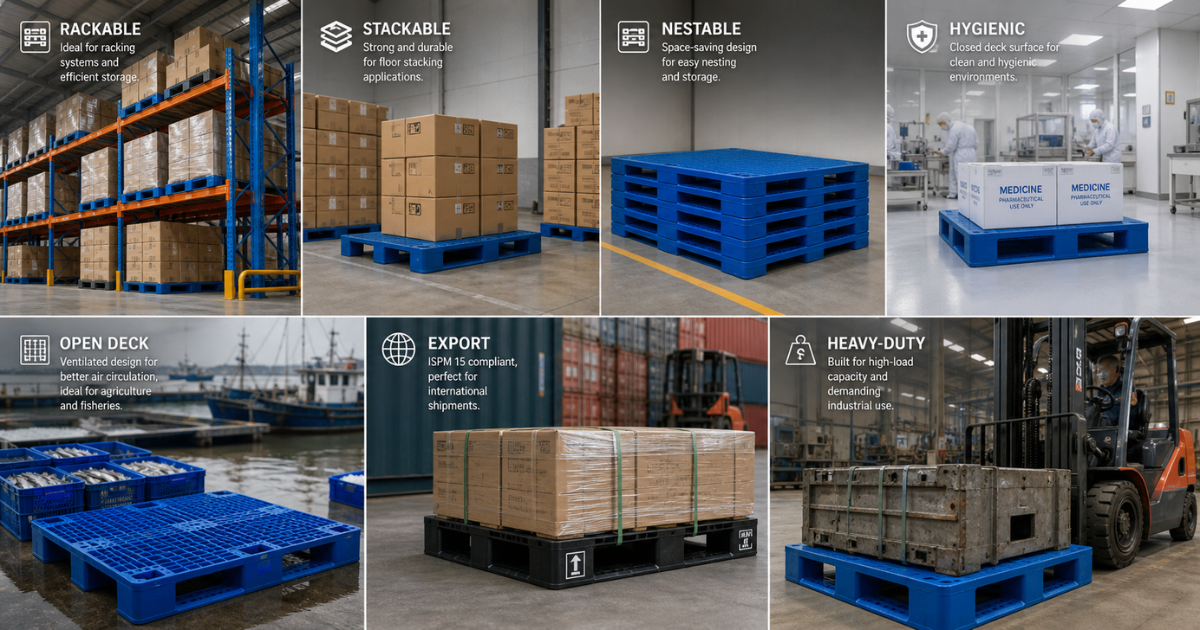
1. Rackable Plastic Pallets
Rackable pallets are made for warehouse racking systems. They can handle loads without bending.
Key Features:
- Strong structure with reinforced edges
- Often includes steel reinforcement
- Suitable for high-load storage
Best For:
- Warehouses with racking systems
- Heavy goods storage
- Long-term inventory holding
2. Stackable Plastic Pallets
Stackable pallets are made to be stable when stacked on top of each other with goods.
Key Features:
- Solid bottom or stacking rims
- Prevents slipping during stacking
- High load-bearing capacity when stacked
Best For:
- Warehouses with floor stacking
- Bulk storage
- Static storage conditions
3. Nestable Plastic Pallets
Nestable pallets fit into each other when empty, saving space.
Key Features:
- Lightweight design
- Space-saving (up to 60–70%)
- Cost-effective for transport
Best For:
- Export shipments
- One-way logistics
- Businesses with limited storage space
4. Hygienic (Closed Deck) Plastic Pallets
These pallets have a surface that prevents contamination.
Key Features:
- Easy to clean and wash
- No gaps for dust or bacteria
- High hygiene standards
Best For:
- Food processing
- Pharmaceuticals
- Cleanroom environments
5. Open Deck Plastic Pallets
Open-deck pallets have a ventilated surface, with holes or grids.
Key Features:
- Better airflow
- Lightweight
- Quick drying
Best For:
- Agriculture
- Fisheries
- Industries needing ventilation
6. Export Plastic Pallets
Export pallets are made for one-time use in shipping.
Key Features:
- Lightweight and economical
- ISPM-15 compliant (no treatment required)
- Easy handling
Best For:
- International shipping
- Air cargo
- Cost-sensitive logistics
7. Heavy-Duty Plastic Pallets
These pallets are built for high load capacity and rough usage.
Key Features:
- Thick structure
- High dynamic and static load capacity
- Long service life
Best For:
- Manufacturing units
- Automotive industry
- Heavy goods movement
How to Choose the Right Plastic Pallet
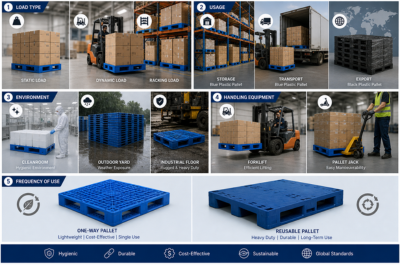
Before buying, match the pallet with your operation:
- Load Type: Static, dynamic and racking load
- Usage: Storage, transport or export
- Environment: Cleanroom, outdoor or industrial
- Handling Equipment: Forklift or pallet jack
- Frequency of Use: One-way or multi-use
Don’t choose based on price. A cheaper pallet that fails early will cost more in the run.
Common Mistakes to Avoid
- Ignoring load capacity specifications
- Choosing the wrong deck type
- Not considering storage method (rack vs floor)
- Overlooking conditions
- Skipping data sheet verification
Final Thoughts
Plastic pallets are not all the same. The right type depends on how and where you use it. When load capacity, design and application align, pallets become an asset—not just a cost.
If you’re unsure, always ask your supplier for a data sheet and application guidance before making a decision.
Buy pallets onlineExport pallets supplierExport plastic palletsHDPE plastic palletsIndia Pallet MartOnline pallet marketplace IndiaPallet manufacturers IndiaPallet procurement platformPlastic pallets IndiaPlastic Pallets Online