- Empty cart.
- Continue Shopping


Structural Engineering of Plastic Pallets: How HDPE Design Improves Load Stability and Warehouse Efficiency
- Posted on
Swift Technoplast
- 0
- Categories: Articles
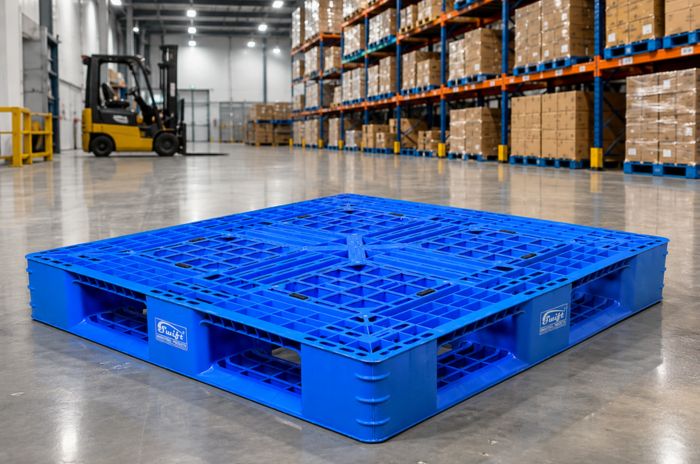
In a world where modern warehouses and manufacturing plants focus heavily on speed, they forget that efficiency is also about long-lasting stability, safety, and durability. One tiny yet very essential element that keeps everyday logistics working is the Plastic pallets.
Up until recent times, wooden pallets were the staple for warehouse operations. However, with the rise of automation and improvement in the quality standards, most companies have gradually turned to plastic pallets made of HDPE. The explanation for this is straightforward — the design of a plastic pallet is geared towards strength, stability, and reliability.
Good plastic pallets do not happen by accident. The decision on the pallet shape, the material it is made from, the pattern of ribs, as well as the method of load distribution – these are all aspects which are carefully thought through, and together they allow the pallets to be capable of heavy loading while still ensuring safety and high performance.
Here is a breakdown of how the HDPE pallet design facilitates load stabilisation and increases overall warehouse efficiency.
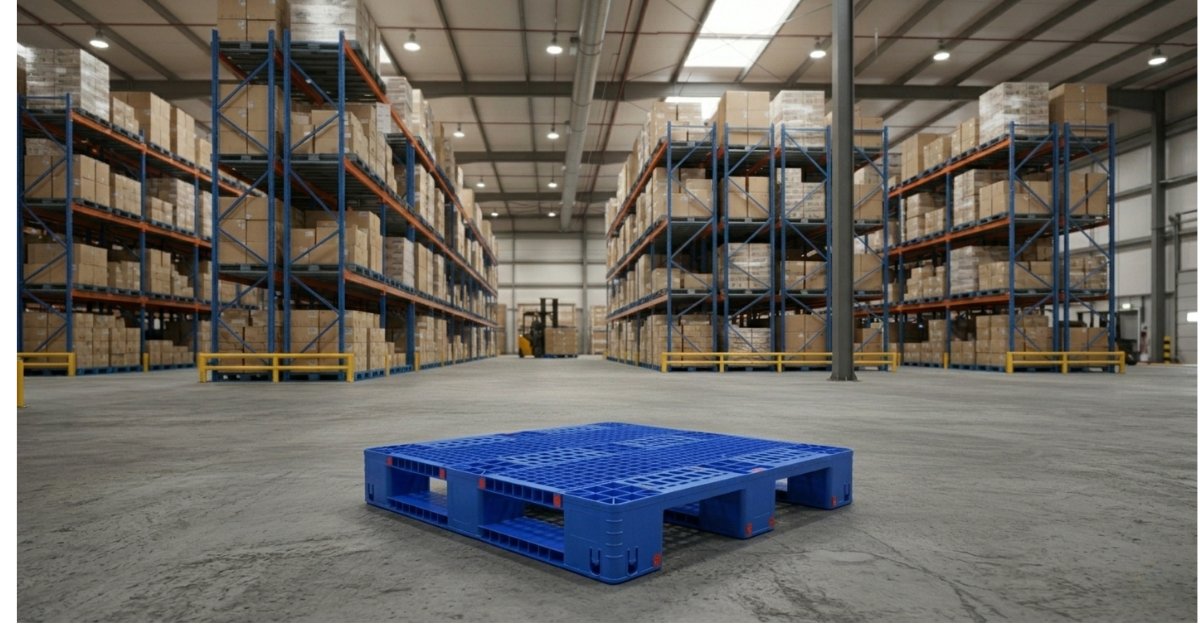
Understanding Plastic Pallets HDPE as Structure Material
Since HDPE (High Density Polyethylene) boasts an excellent strength-to-weight ratio as well as durability, this material is a common choice in industries where heavy use is expected.
One thing that is obviously quite different when comparing HDPE with wood is that the latter has a lot of natural imperfections, but the former has a uniform strength throughout the whole pallet. In fact, this level of uniformity is an enabler for makers of pallets that can be counted on to bear specified loads without fail.
Some of the main features of HDPE include:
- Very high impact resistance
- Excellent loading distribution ability
- Chemical and moisture resistance
- Extended service life
Due to these features, HDPE has been the go-to material for plastic pallets in warehousing and logistics operations and pharmaceuticals, as well as food processing plants.
Structural Design of Plastic Pallets for Load Stability
Plastic pallets’ ribbed undersides are one of the most significant concepts in their engineering.
HDPE pallets normally don’t have a solid base; instead, they have well-thought-out rib patterns that serve as the support beams. These ribs carry the load over the pallet surface evenly.
This design helps in several ways:
- Makes the pallets withstand heavier loads without bending
- Lessens the pressure concentration area
- Helps maintain higher overall structural rigidity
Under such scenarios as transporting chemical drums, cartons, or large containers, the pallet stability without the ribbing is always questionable. The beauty of a rib structure is that the pallet can stay mostly still during forklift or pallet jack movements despite swinging and bumps.
Load Distribution in Plastic Pallets: An Intelligent Design
Distribution of the load is as important as load-carrying at the best level of a pallet.
There is a lot of engineering that goes into creating HDPE pallets such as mesh decks or reinforced top surfaces that help with the uniform spreading of the loads. It is this that prevents the boards from sagging, and eventually, pallets always keep their shapes for a longer time.
Load stability is key in cases when the goods are stacked on the pallets one on top of another in the operation of a warehouse. If pallets are not designed well, they can tip over, or the stack can crumble due to uneven weight.
HDPE structural engineering is the answer to this problem in the following ways:
- Smooth load transfer
- Stacking manner is more stable
- Less chance of product damage
Hence, storage is safer; thus, handling becomes much smoother.
Enhancing Handling Efficiency by Lightweight Design
Despite being highly durable, HDPE pallets are still considerably lighter than wooden or metal ones.
The ability of this low-weight property to boost warehouse productivity cannot be overstated.
“People keep the pace with the pallet movement, the battery duration will last for the forklift due to less power consumption, and the shipping cost may be lowered if the overall weight of the shipment becomes less.”
What makes the structural engineering of HDPE pallets so great is that it enables producers to cut unnecessary bulk and still maintain the strength by using the reinforcing geometry.
The harmony of the two, i.e., strength and weight, thus, guarantees that the operational efficiency level is taken to a new height while safety is still being observed.
Resistance to Environmental Stress
What a huge plus for HDPE pallets is that they are built to resist harsh environmental factors.
Pallets made of wood may take in moisture and later crack or weaken. Metal pallets may get rusty when exposed to chemicals.
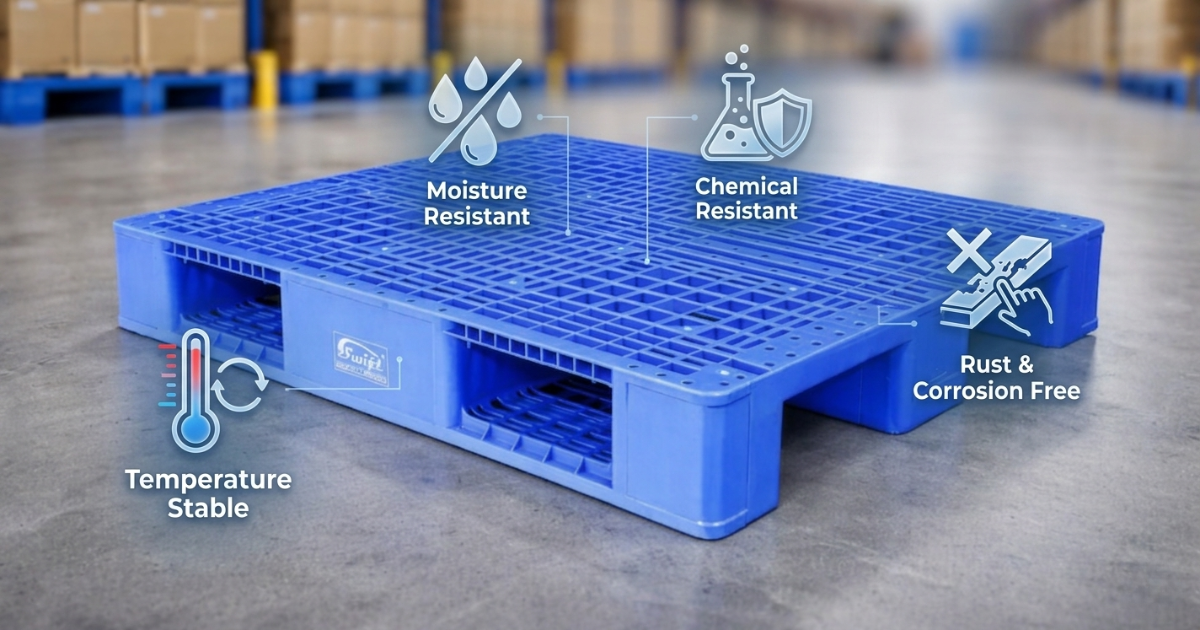
However, HDPE is not only good, but it can also resist the following:
- Moisture
- Chemicals
- Corrosion
- Changes in temperature
Therefore, HDPE pallets preserve their strength characteristics quite well, notwithstanding being exposed to industrial conditions for a long time.
This kind of dependable performance is exactly what brings about steady warehouse productivity and decreased downtime.
Compatibility with Automated Warehousing Systems
Automation solutions such as conveyors, automated storage and retrieval systems (ASRS), and robotic pallet handling are more and more becoming the norm in modern warehousing.
Precision-engineered plastic pallets are the ones that fit perfectly into these automation systems since they guarantee the same dimensions and integrity of structure.
Thus, the automated lines can keep flowing without interruptions because of misalignment or breakdowns of the pallets.
With the rise of smart warehouse and automation-driven supply chains, pallets made of HDPE with the proper structural engineering are the indispensable backbones of those movements.
Long-Term Cost Efficiency
Upon initial inspection, it se ems that the price of plastic pallets as compared to wooden ones is higher. Although longevity is one of the things that contributes to lower costs in the long run, the reality is that not everyone can see that at first.
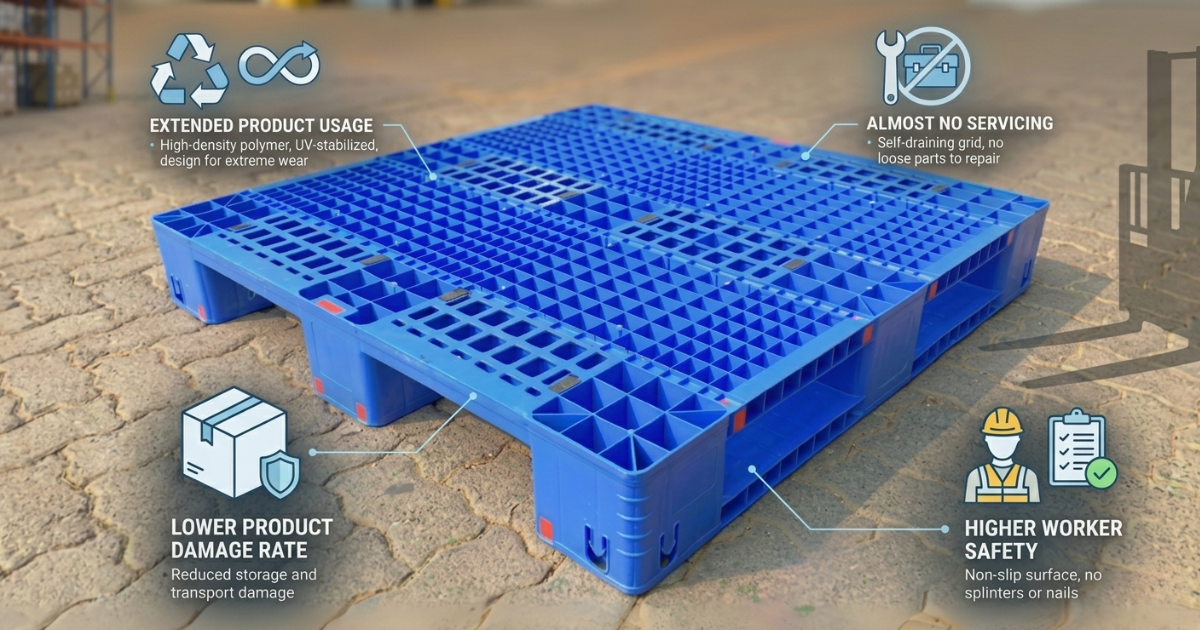
HDPE pallets bring about various benefits, such as:
- Extended product usage
- Almost no servicing
- Lower product damage rate during storage and transport
- Higher worker safety in the warehouse
Injections of capital lead to better profit margins and an increase in the efficiency of business operations over time as a result of the above-mentioned scenarios.
Conclusion
In reality, plastic pallets are much more than mere carriers of loads. They are outcomes of meticulous structural engineering work that intends to enhance stability, safety, and effectiveness of one’s operations.
Through their reinforced rib structures, intelligent load distribution, and use of durable HDPE material, these pallets are able to consistently deliver outstanding performance even in tough industrial conditions.
The more warehouses get smart with automation and bring in more stringent efficiency criteria, the more important the role of engineered HDPE pallets will be.
If you are a company that is looking to improve logistics reliability, minimise the risk of failures in the handling process, and increase the productivity of your warehouse, factoring in good plastic pallets is a sensible and forward-looking move.
Buy pallets onlineExport pallets supplierExport plastic palletsHDPE plastic palletsIndia Pallet MartOnline pallet marketplace IndiaPallet manufacturers IndiaPallet procurement platformPlastic pallets IndiaPlastic Pallets Online