- Empty cart.
- Continue Shopping


FDA-Compliant Plastic Pallets: Why Hygiene Is Becoming a Priority
- Posted on
Swift Technoplast
- 0
- Categories: Articles
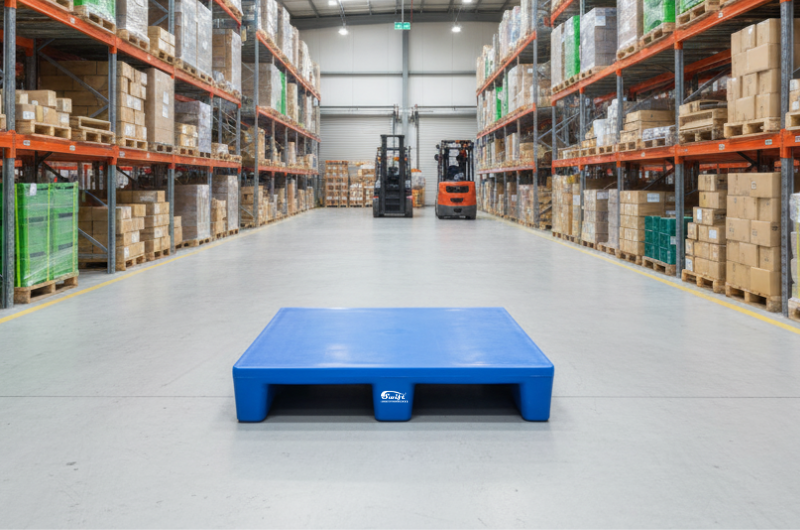
In food, pharmaceutical, healthcare and other sensitive industries moving materials is no longer about moving items from one place to another. Hygiene, cleanliness, durability, contamination control and ease of maintenance are now key when we choose pallets for storage, transport and internal logistics. Traditional wooden pallets can have nails, splinters and rough surfaces. They also create spots that are hard to clean. Pallets must therefore be clean and easy to maintain. Plastic pallets provide a non-porous surface, making them ideal for environments where cleanliness is essential.
This is where hygienic plastic pallets play an important role in maintaining hygiene standards. Also known as rotomolded plastic pallets, they are manufactured from high-quality, food-grade LLDPE using a rotational moulding process. Their durable construction makes them suitable for demanding material-handling environments where hygiene, cleanliness, and durability are essential.
Because of smooth, easy‑to‑clean surfaces, resistance to moisture and contaminants, non‑porous construction, and full recyclability, hygienic plastic pallets can help create more organised logistics operations in food, pharmaceutical, healthcare and other sensitive industries.
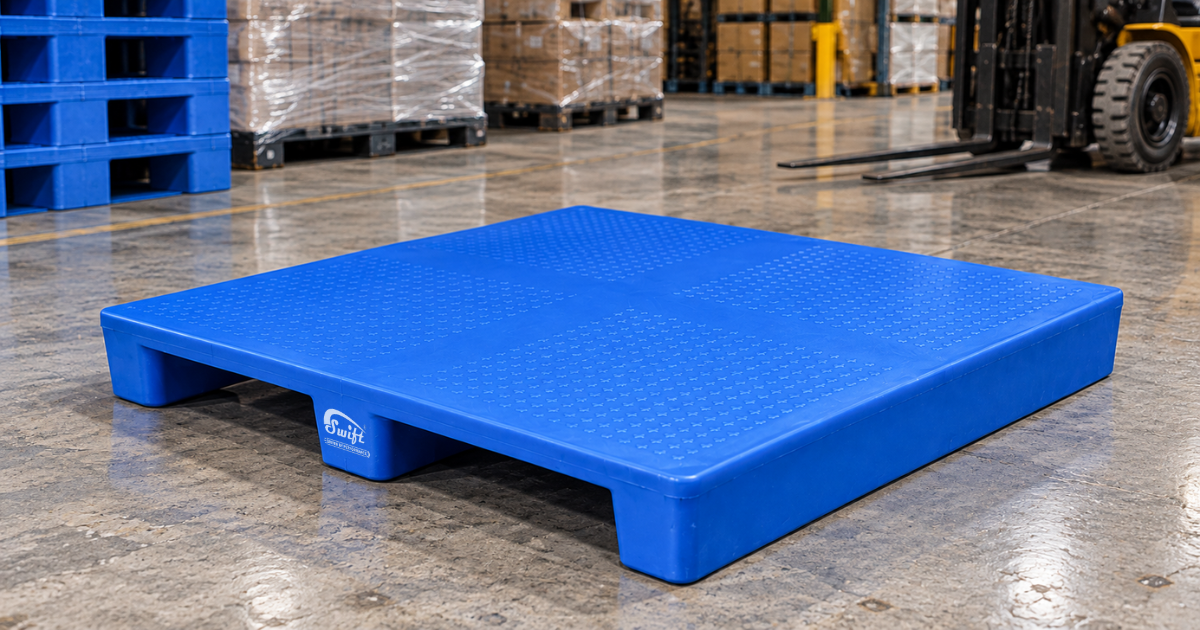
What Are Hygienic Plastic Pallets?
Hygienic plastic pallets are durable, easy-to-clean platforms designed for material handling in industries where hygiene and sanitation are critical.
Hygienic pallets are manufactured from food-grade LLDPE using a moulding process. Their smooth, non-porous surfaces make them easy to clean and help prevent the absorption of liquids, odours, and harmful substances.
These features make hygienic plastic pallets good for industries such as:
- Food processing
- Food and beverage logistics
- Pharmaceutical logistics
- Healthcare
- Warehousing
- Cold-chain operations
- Sensitive manufacturing environments
- Industrial material handling
Plastic pallets are different from wooden pallets because they don’t have nails or splinters. This means they give a steady surface when moving or handling goods. The surface stays the same every time, which helps in keeping things safe and organised during transport.
Why Is Hygiene Becoming a Priority in Food & Pharmaceutical Logistics?
Food and pharmaceutical supply chains handle products that require careful protection from environmental factors. Exposure to germs, moisture, dirt, odours, and other contaminants can affect product quality and safety.
Pallets are used during the shipping process, including:
- Manufacturing
- Processing
- Storage
- Internal material movement
- Warehousing
- Transportation
- Distribution
Types of Hygienic Plastic Pallets
| Pallet Series / Variant |
| 2-Way Entry Non-Reversible Plastic Pallets |
| 2-Way Entry Non-Reversible Plastic Pallets – P Series |
| 2-Way Entry Non-Reversible Plastic Pallets – R Series |
| 4-Way Entry Non-Reversible Plastic Pallets – H Series |
| 4-Way Entry Non-Reversible Plastic Pallets – P Series |
| 4-Way Entry Non-Reversible Plastic Pallets |
| Drive-In Rack Plastic Pallets |
Key Features of Hygienic Plastic Pallets
1. Premium Food-Grade LLDPE
Swift hygienic plastic pallets are crafted using premium food‑grade LLDPE materials.
This material choice works for uses where hygiene and cleanliness are important matters.
2. Smooth, Easy-to-Clean Surface
A smooth pallet surface helps make daily cleaning and upkeep easier.
Plastic pallets provide a consistent moulded surface that supports easier cleaning and routine sanitation processes.
This is particularly valuable in environments where pallets are exposed to:
- Food materials
- Packaging
- Moisture
- Dust
- Processing environments
- Frequent handling
3. Non-Porous Construction
One of the key advantages of hygienic pallets is their non-porous surface.
The supplied product information specifies that these pallets help prevent the absorption of:
- Liquids
- Odours
- Bacteria
This characteristic supports the need for cleaner material-handling practices in sensitive logistics environments.
4. Moisture and Contaminant Resistance
In pharmaceutical and healthcare logistics, controlling moisture and contaminants is essential. Hygienic plastic pallets resist moisture and contaminants, helping maintain cleaner handling environments for sensitive materials.
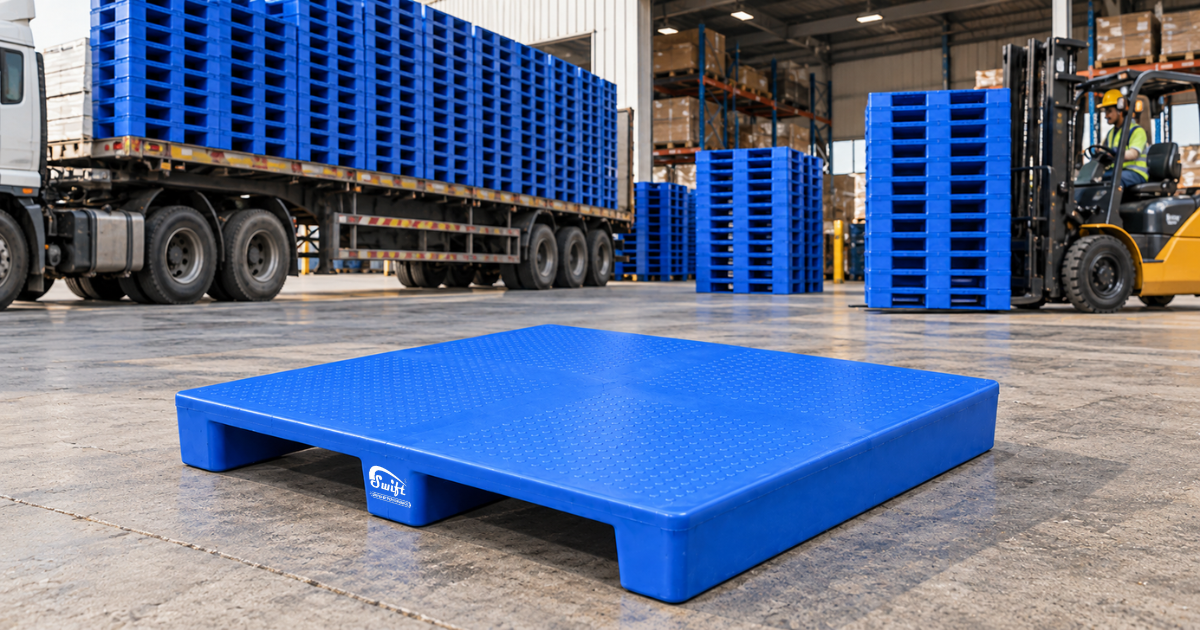
Roto Moulding Technology for Hygienic Pallets
Swift Technoplast manufactures these hygienic pallets through the rotational moulding process, commonly known as roto moulding.
During rotational moulding, manufacturers form the plastic into the required pallet structure through a controlled moulding process.x
For pallet applications, this manufacturing approach helps create a consistent moulded structure without the nails and joints associated with conventional wooden pallets.
The resulting pallet design combines:
Plastic construction + smooth surfaces + durability + easy handling + hygiene-focused design
Why Non-Porous Plastic Surfaces Matter
Porosity matters a lot when I choose material handling products for places that need to stay clean. Porosity is a factor in picking items that will keep environments hygienic.
A porous material can soak up liquids. Hold onto smells or germs. A non-porous plastic surface does not soak up these things.
Pallets have a non-porous surface that helps prevent the absorption of liquids, odours, and bacteria. Their design helps keep surfaces dry and clean.
This is especially useful in food and pharmaceutical logistics, where keeping handling matters. Food and pharmaceutical logistics rely on handling to avoid contamination.
Hygienic Plastic Pallets for Food Logistics
Food processing and distribution environments require careful attention to cleanliness at multiple stages of the supply chain.
Pallets can be used for:
- Food product transportation
- Ingredient movement
- Warehouse storage
- Distribution centres
- Packaging operations
- Internal material movement
- Processing environments
In food logistics, businesses should select pallets based on applicable food-contact requirements, cleaning methods, operating conditions, and relevant regulations.
Hygienic Plastic Pallets for Pharmaceutical Logistics
Pharmaceutical logistics requires controlled handling environments and careful attention to cleanliness.
Pallets can be used for moving:
- Pharmaceutical packaging
- Finished products
- Raw materials
- Secondary packaging
- Warehouse materials
- Distribution loads
Hygienic plastic pallets can support these operations because their construction is smooth, non-porous and easy to clean.
However, businesses should assess each pallet’s suitability based on the product, facility requirements, sanitation procedures, and applicable regulatory standards.
Are Plastic Pallets FDA-Compliant?
FDA suitability does not depend solely on whether a pallet is made from plastic or labelled as food-grade. Businesses must consider the specific raw materials, additives, intended use, manufacturing conditions, and applicable requirements when determining FDA suitability.
For companies that buy pallets for food, pharmaceutical or other regulated uses, it is important to check the documentation and specifications for the exact pallet and the particular use. This helps ensure FDA suitability for the pallet.
Swift’s Pallets are said to be made with food‑grade LLDPE. They have features such as smooth surfaces, a non‑porous build and resistance to moisture and contaminants, giving the pallet a high standard of hygiene.
Durability and Long-Term Material Handling
Hygiene matters a lot. Pallets also need to handle daily logistics work. Pallets are made to offer strength along with design.
Businesses can reuse these pallets repeatedly for material handling in warehouses, manufacturing facilities, storage areas, and distribution operations.
Businesses can reuse plastic pallets repeatedly for material handling, depending on the application requirements and operating conditions.
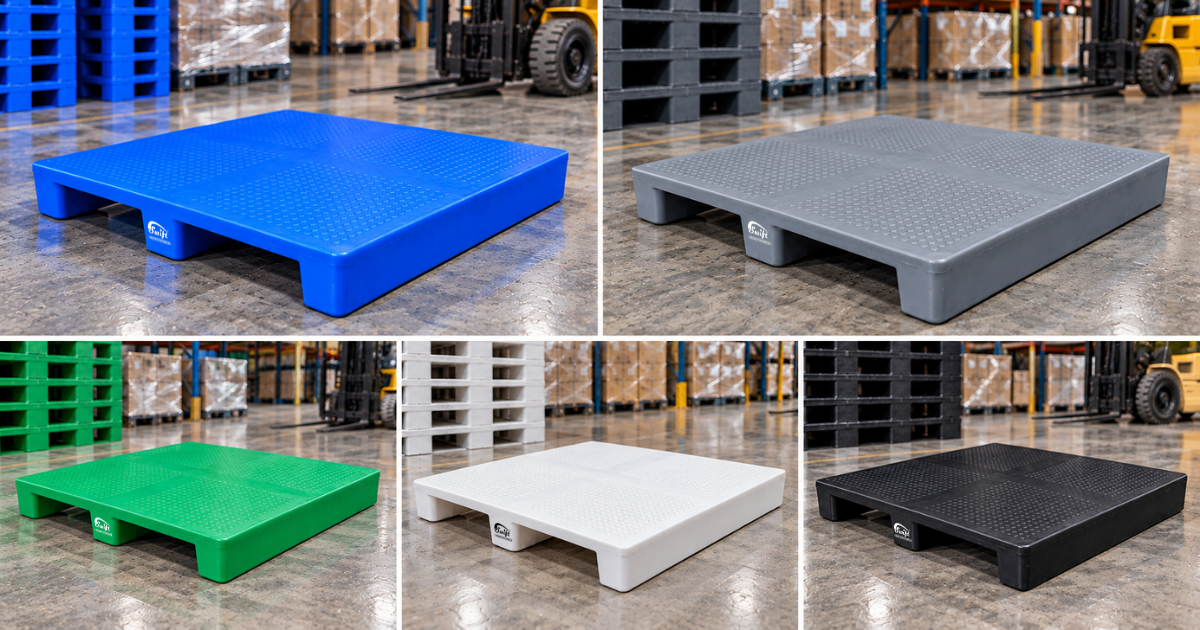
Lightweight Design for Easier Handling
The supplied product information highlights the lightweight design of hygienic pallets.
Lower pallet weight can make handling and transportation more convenient for logistics teams.
They can be integrated into material-handling workflows involving:
- Forklifts
- Pallet handling equipment
- Warehouse movement
- Transportation
- Storage operations
Businesses should always confirm the handling compatibility of the selected pallet model with the equipment used in their operations.
600+ Designs and Models for Different Applications
One of the key advantages of Swift Technoplast’s plastic pallet range is its extensive selection.
With 600+ designs and models, businesses can select pallet configurations according to their specific operational requirements.
Different industries can have different requirements related to:
- Load handling
- Storage
- Transportation
- Warehouse layout
- Hygiene
- Pallet dimensions
- Handling equipment
- Application environment
A broad product range allows businesses to identify a pallet design suited to their particular logistics workflow.
Environmentally Friendly and Recyclable
Sustainability is becoming another important consideration in industrial logistics.
The pallets described here are fully recyclable.
Reusable pallets can also help businesses reduce dependence on single-use handling products and minimise material waste, depending on the operational model and pallet lifecycle.
Businesses can reuse pallets multiple times because they offer durability, easy handling, and consistent performance throughout their service life.
Applications of Hygienic Plastic Pallets
Food Processing
Suitable for handling and moving food-related materials in controlled environments.
Food & Beverage Logistics
Useful for storage, transportation, and distribution operations.
Pharmaceutical Warehousing
Pharmaceutical warehousing can help move and store materials when it is suitable.
Healthcare
Healthcare is fit for material handling places where hygiene and cleanability matter a lot.
Cold-Chain Logistics
Plastic construction and moisture resistance can make pallets a practical option for certain temperature-controlled logistics environments.
Packaging Operations
Can be used for handling packaging materials and finished goods.
Distribution Centres
Reusable pallets can support repeated warehouse and distribution operations.
Why Choose Swift Technoplast Hygienic Plastic Pallets?
Swift Technoplast offers pallets designed to combine safe, durable, and hygienic material handling.
The pallets are made from high-quality food-grade LLDPE. They use moulding technology. The surfaces are smooth and not porous. The surfaces are made to be easy to clean. The surfaces stand up to moisture and harmful things.
Additional advantages include:
- Durable plastic construction
- Hygienic surface design
- Non-porous construction
- Moisture resistance
- Resistance to absorption of liquids and odours
- No nails
- No splinters
- No sharp edges
- Lightweight handling
- Fully recyclable material
- 600+ designs and models
- Suitable for diverse industrial applications
These characteristics make the range suitable for businesses looking for practical pallet solutions for food, pharmaceutical, healthcare, warehousing, manufacturing, and logistics operations.
The Future of Hygiene-Focused Material Handling
As supply chains become more organised and hygiene requirements gain importance, companies are paying closer attention to every stage of shipping and delivery.
Pallets play an important role in this process because they come into contact with products, floors, storage areas, handling equipment, water, and various transportation environments.
Picking a pallet that is not rough and has easy to clean surface can help create a better and tidier way to move things around.
Plastic pallets also offer advantages such as durability, reusability, easy handling, and consistent performance throughout their service life.. This makes them a good choice of regular plastic pallets for many situations.
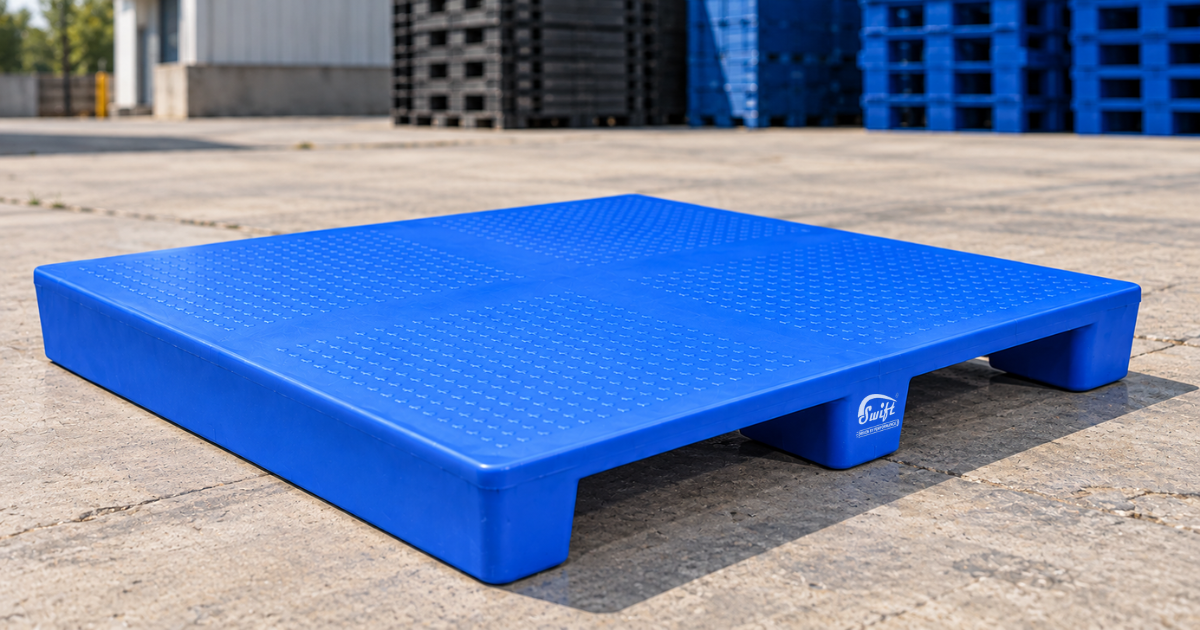
Frequently Asked Questions
What are hygienic plastic pallets?
Hygienic plastic pallets are designed for applications where cleanliness and hygiene are essential. They are easy to clean, resist moisture and help keep contamination under control. Swift Technoplast makes these pallets using quality food-grade LLDPE through a rotational moulding process.
Are plastic pallets suitable for the food industry?
Yes, plastic pallets can work well in the food industry. This is particularly useful when businesses need smooth surfaces that resist dirt and bacteria and allow easy cleaning. However, businesses should select the right pallet based on its intended use, food-contact requirements, and applicable hygiene and safety standards.
What material is used to manufacture hygienic plastic pallets?
Swift hygienic plastic pallets are manufactured using food-grade LLDPE.. For applications involving direct or indirect food contact, the applicable material documentation and conditions of use should be verified for the specific pallet model.
Do plastic pallets absorb water or odours?
The hygienic plastic pallets described by Swift have non-porous surfaces designed to prevent the absorption of liquids and odours.
Can hygienic plastic pallets be used in pharmaceutical logistics?
Yes, businesses can consider these pallets for pharmaceutical logistics when their hygiene and material-handling characteristics meet the specific requirements of the application. Specific pharmaceutical suitability should be verified based on the facility and regulatory requirements.
Are Swift hygienic plastic pallets recyclable?
Yes. The supplied product information states that the hygienic plastic pallets are fully recyclable.
Why are pallets safer than wooden pallets?
Pallets are manufactured without nails and splinters and are designed without sharp edges. This can provide a safer handling surface compared with damaged wooden pallets.
How many designs of plastic pallets does Swift Technoplast offer?
Swift Technoplast offers 600+ designs and models of pallets to cater to diverse industrial applications.
Conclusion
Hygiene is becoming more and more important in food, pharmaceutical, healthcare and other sensitive logistics areas. As pallets are repeatedly used for storage, transportation, processing, and distribution, their material and surface design can help maintain cleaner handling conditions.
Rewritten version:
Hygienic plastic pallets from Swift Technoplast are manufactured from quality food-grade LLDPE using a rotational moulding process. Their non-porous surfaces make them easy to clean and help resist moisture and contaminants. Their nail-free, splinter-free design, lightweight construction, and recyclability make them a practical option for hygiene-focused material handling applications.
There are more than 600 designs and models available from Swift Technoplast. This means they offer different types of pallets for food, pharmaceutical, healthcare, warehousing and industrial logistics.
For applications that require FDA compliance or involve direct food contact, companies should verify the documentation for the specific pallet, material, intended use, and applicable requirements before making compliance claims. Selecting the right hygienic plastic pallet can support cleaner, safer, and more efficient material handling operations.