- Empty cart.
- Continue Shopping


HDPE Plastic Pallets: Better Load Stability for Warehouses
- Posted on
Swift Technoplast
- 0
- Categories: Articles
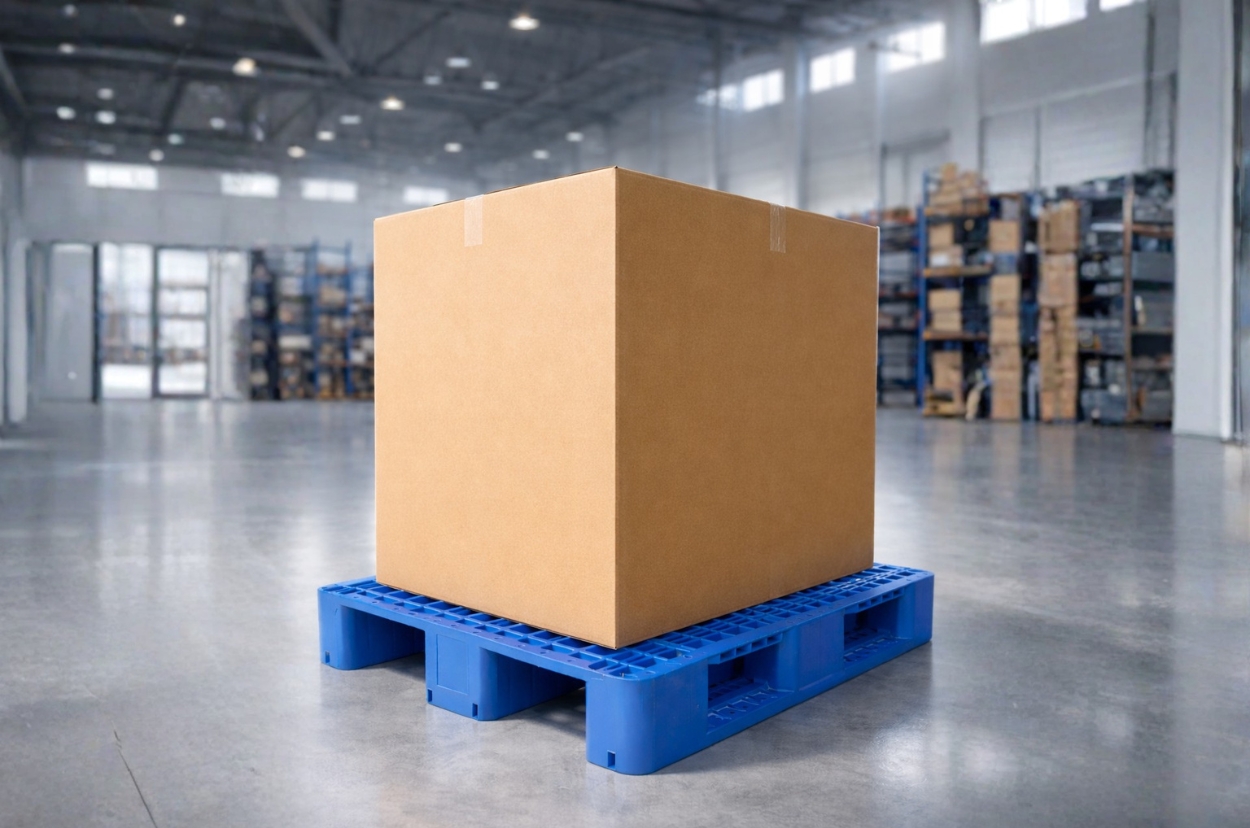
In a world where modern warehouses and manufacturing plants focus heavily on speed, they forget that efficiency is also about long-lasting stability, safety, and durability. One tiny yet very essential element that keeps everyday logistics working is the pallet. Up until recent times, wooden pallets were the staple for warehouse operations. However, with the rise of automation and improvement in the quality standards, most companies have gradually turned to plastic pallets made of HDPE. The explanation is straightforward — manufacturers design plastic pallets to deliver strength, stability, and reliability. Good plastic pallets do not happen by accident.Engineers carefully determine the pallet shape, choose the material, design the rib pattern, and develop the load distribution method. Together, these design elements help plastic pallets support heavy loads while maintaining safety, stability, and high performance.
Here is a breakdown of how the HDPE pallet design facilitates load stabilisation and increases overall warehouse efficiency.
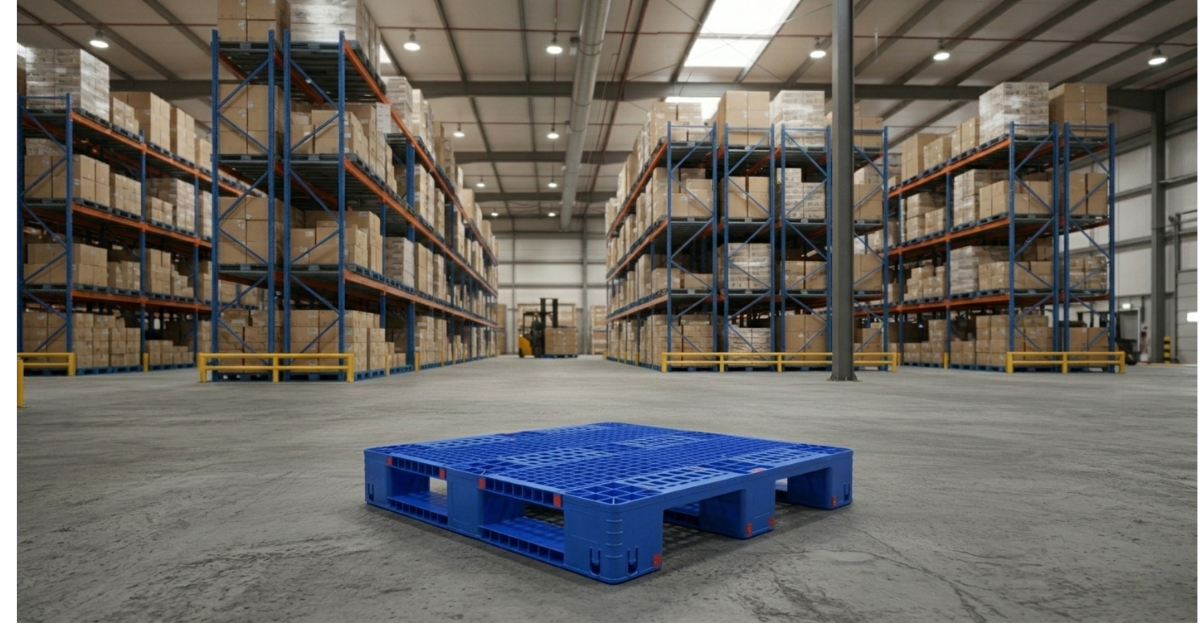
Understanding HDPE as Structure Material
Industries that require durable and high-performance materials often choose HDPE (High-Density Polyethylene) because it offers an excellent strength-to-weight ratio and long-lasting durability. One thing that is obviously quite different when comparing HDPE with wood is that the latter has a lot of natural imperfections, but the former has a uniform strength throughout the whole pallet. This level of uniformity allows manufacturers to produce pallets that reliably support specified loads without failure.
Some of the main features of HDPE include:
- Very high impact resistance
- Excellent loading distribution ability
- Chemical and moisture resistance
- Extended service life
Due to these features, HDPE has been the go-to material for plastic pallets in warehousing and logistics operations and pharmaceuticals, as well as food processing plants.
Structural Design of Ribs for Load Steadiness
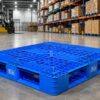
Plastic pallets’ ribbed undersides are one of the most significant concepts in their engineering. HDPE pallets normally don’t have a solid base; instead, they have well-thought-out rib patterns that serve as the support beams. These ribs carry the load over the pallet surface evenly.
This design helps in several ways:
- Makes the pallets withstand heavier loads without bending
- Lessens the pressure concentration area
- Helps maintain higher overall structural rigidity
Under such scenarios as transporting chemical drums, cartons, or large containers, the pallet stability without the ribbing is always questionable. The beauty of a rib structure is that the pallet can stay mostly still during forklift or pallet jack movements despite swinging and bumps.
Load Distribution on the Deck: An Intelligent Concept
Distribution of the load is as important as load-carrying at the best level of a pallet. There is a lot of engineering that goes into creating HDPE pallets such as mesh decks or reinforced top surfaces that help with the uniform spreading of the loads. It is this that prevents the boards from sagging, and eventually, pallets always keep their shapes for a longer time.Load stability plays a critical role when warehouses stack goods on pallets. Poorly designed pallets can tip over or cause stacks to collapse due to uneven weight distribution.
HDPE structural engineering is the answer to this problem in the following ways:
- Smooth load transfer
- Stacking manner is more stable
- Less chance of product damage
Hence, storage is safer; thus, handling becomes much smoother.
Enhancing Handling Efficiency by Lightweight Design
Despite their high durability, HDPE pallets weigh significantly less than wooden or metal pallets. Their lightweight design improves warehouse productivity by making handling, transportation, and storage more efficient.
“Workers can move pallets more efficiently, forklifts consume less power and achieve longer battery life, and businesses can reduce shipping costs by lowering the overall weight of shipments.”
What makes the structural engineering of HDPE pallets so great is that it enables producers to cut unnecessary bulk and still maintain the strength by using the reinforcing geometry. The ideal balance between strength and weight helps businesses improve operational efficiency while maintaining high safety standards.
Resistance to Environmental Stress
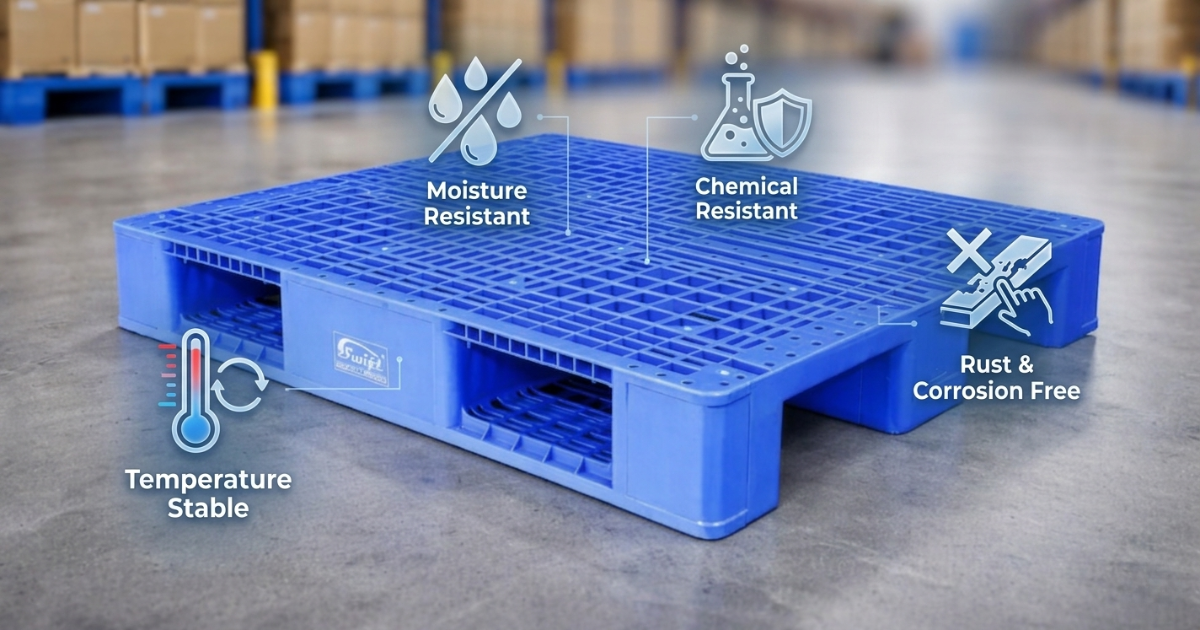
Manufacturers design HDPE pallets to withstand harsh environmental conditions, making them a major advantage for industrial applications. Pallets made of wood may take in moisture and later crack or weaken. Metal pallets may get rusty when exposed to chemicals.
However, HDPE is not only good, but it can also resist the following:
- Moisture
- Chemicals
- Corrosion
- Changes in temperature
HDPE pallets retain their strength and structural integrity even after prolonged exposure to demanding industrial environments. This kind of dependable performance is exactly what brings about steady warehouse productivity and decreased downtime.
Compatibility with Automated Warehousing Systems
Automation solutions such as conveyors, automated storage and retrieval systems (ASRS), and robotic pallet handling are more and more becoming the norm in modern warehousing. Precision-engineered plastic pallets are the ones that fit perfectly into these automation systems since they guarantee the same dimensions and integrity of structure. Thus, the automated lines can keep flowing without interruptions because of misalignment or breakdowns of the pallets. With the rise of smart warehouse and automation-driven supply chains, pallets made of HDPE with the proper structural engineering are the indispensable backbones of those movements.
Long-Term Cost Efficiency
Upon initial inspection, it seems that the price of plastic pallets as compared to wooden ones is higher. Although longevity is one of the things that contributes to lower costs in the long run, the reality is that not everyone can see that at first.
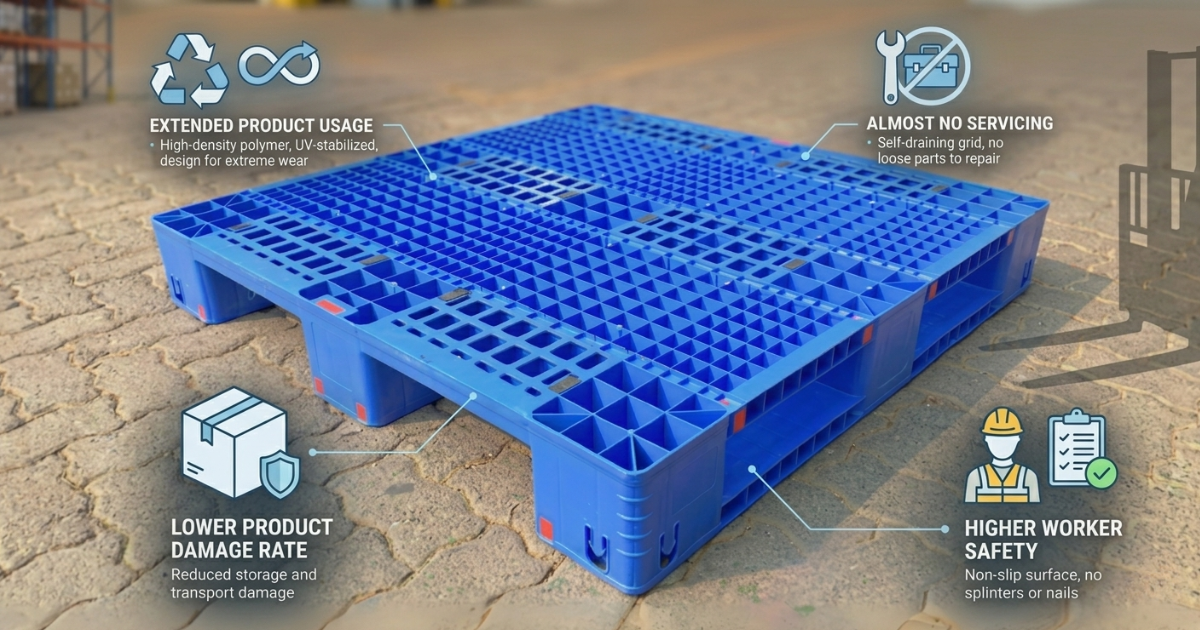
HDPE pallets bring about various benefits, such as:
- Extended product usage
- Almost no servicing
- Lower product damage rate during storage and transport
- Higher worker safety in the warehouse
Injections of capital lead to better profit margins and an increase in the efficiency of business operations over time as a result of the above-mentioned scenarios.
Conclusion
In reality, plastic pallets are much more than mere carriers of loads. Engineers design HDPE pallets to enhance stability, safety, and operational efficiency. They improve load stability, warehouse efficiency, automation compatibility, logistics reliability, and long-term productivity in demanding industrial environments.
HDPE Pallet DesignHDPE plastic palletsHeavy Duty Plastic PalletsIndustrial plastic palletsIndustrial Storage SolutionsLoad DistributionLoad StabilityLogistics SolutionsMaterial Handling SolutionsPlastic Pallet EngineeringPlastic Pallet ManufacturersPlastic palletsStorage PalletsSupply Chain ManagementWarehouse EfficiencyWarehouse Pallets